
Golden Triangle Tour — 4 Nights & 5 Days | Delhi, Agra & Jaipur
- ( 280 Reviews )
- Delhi
- Agra
- Jaipur
- Duration: 5 Days
- Skip Line
- Pickup Available
- Private Tour
Tour overview
If the 3-day Golden Triangle is a sprint and the 4-day is a jog, the 5-day tour is how this journey was meant to be done.
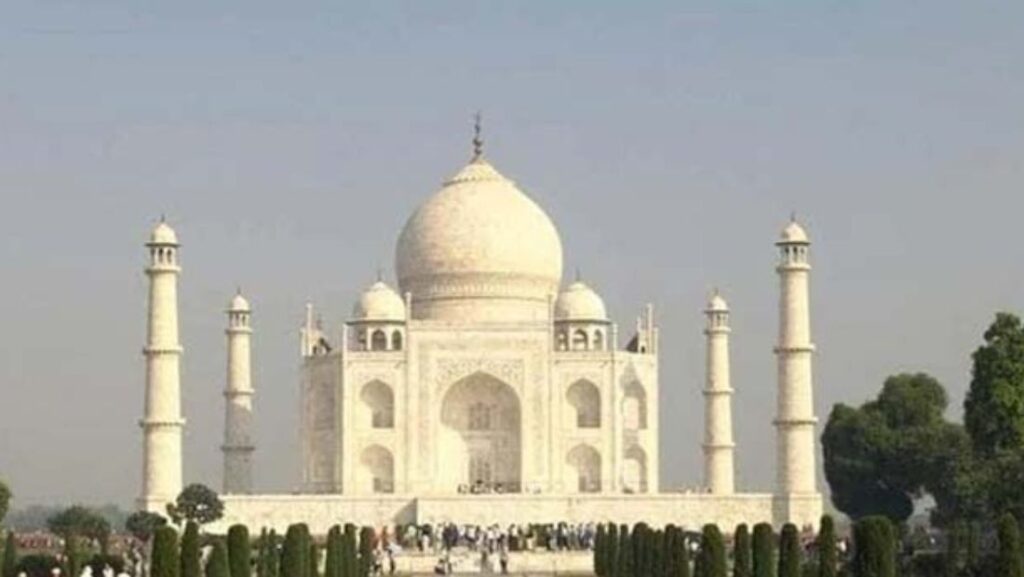
With two full days dedicated to Delhi and its surroundings, two nights in Jaipur, and a completely private itinerary that bends to your pace — this tour doesn’t cut corners. You’ll visit Akshardham Temple, one of the most astonishing pieces of architecture in the modern world. You’ll stand before the Taj Mahal at sunrise with almost no one else around. You’ll explore all three of Jaipur’s great hillforts and still have time to wander the bazaars.
More time means more depth: a longer conversation with your guide at Agra Fort, an extra hour at the Taj Mahal watching the marble change colour as the light shifts, a leisurely Rajasthani thali lunch instead of eating on the run. This is our most popular Golden Triangle length precisely because it delivers the full experience without the exhausted blur of trying to squeeze everything into three days.
Best time to travel: October to March, when temperatures sit between 10–25°C and skies are clear. April through June is extremely hot (Agra regularly exceeds 45°C) and July–September brings the monsoon. Note: The Taj Mahal is closed on Fridays — we plan your itinerary around this automatically. Akshardham Temple is closed on Mondays.
Tour highlights
- Duration: 4 nights / 5 days
- Pickup: Your hotel or airport in Delhi (and nearby NCR)
- Cities: Delhi → Agra → Jaipur → Delhi
- Exclusive to this tour: Akshardham Temple, two full days in Jaipur, all three Jaipur hillforts
- Guide: Government-approved, English-speaking guide in each city
- Transport: Private air-conditioned car throughout — no shared coaches
- Monuments: Akshardham Temple, Humayun's Tomb, Qutub Minar, Red Fort, Taj Mahal, Agra Fort, Baby Taj, Amer Fort, Nahargarh Fort, Jaigarh Fort, Hawa Mahal, City Palace, Jantar Mantar & more
- Group size: Fully private — just your group, no strangers
- Cancellation: Free cancellation up to 24 hours before departure
Day-by-day itinerary
Day 1 — Arrive in Delhi · Old & New Delhi sightseeing
Your driver meets you at the airport, railway station, or your Delhi hotel and takes you straight into the city. Day 1 covers the monumental sweep of both Old and New Delhi — the two cities that sit side by side and span nearly a thousand years of history.
Begin in New Delhi with a drive along the grand ceremonial boulevard of Rajpath toward India Gate — the 42-metre war memorial arch that has become the symbolic heart of the capital. Your guide will walk you through its history before heading to Raj Ghat, the tranquil riverside garden where Mahatma Gandhi was cremated in 1948, now a place of quiet pilgrimage. From there, Humayun’s Tomb — a red sandstone and white marble masterpiece built in 1572, the first garden tomb in the subcontinent, and the direct architectural ancestor of the Taj Mahal. Standing here before you’ve seen the Taj is the best way to understand how radical Shah Jahan’s vision truly was.
The afternoon moves south to Qutub Minar, the 73-metre brick minaret that has stood since 1193 and remains the world’s tallest of its kind, rising from the ruins of Delhi’s very first city. Then north again to the Red Fort (Lal Qila) — the vast sandstone citadel from which the Mughal emperors ruled their empire, whose ramparts still bear the scars of Nadir Shah’s invasion in 1739. If time allows, your guide will take you into the dense lanes of Chandni Chowk for the sensory experience of Old Delhi: spice merchants, street food, silver jewellers, and over 400 years of unbroken urban life.
Evening at leisure. Overnight in Delhi.
Monuments: India Gate, Raj Ghat, Humayun’s Tomb, Qutub Minar, Red Fort, Chandni Chowk (Old Delhi lanes). Optional: Lodhi Gardens, Parliament House exterior
Day 2 — Akshardham Temple · Drive to Agra
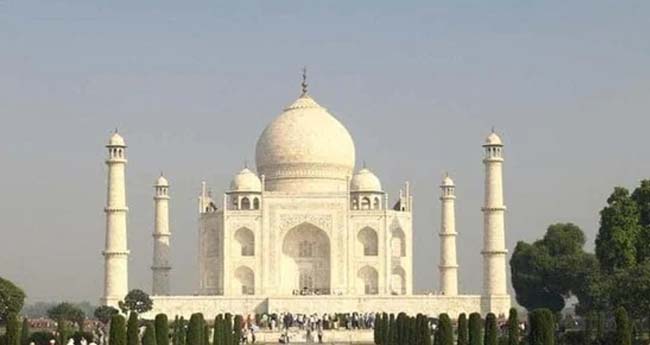
After checkout, your driver takes you east across Delhi to Akshardham Temple — and if you’ve never heard of it, prepare to be stunned.
Inaugurated in 2005, Akshardham is the largest Hindu temple complex in the world. The main monument is built from 6,000 tonnes of intricately hand-carved pink Rajasthani sandstone and Italian Carrara marble — with not a single steel beam in its structure. Every surface is carved: 234 ornate pillars, 9 domes, 20,000 sculpted figures of deities, saints, musicians, dancers, and animals wrapping around the entire structure in an unbroken frieze. It took 11,000 artisans five years to build. The result is overwhelming in the best possible way — a building that makes you stop walking and simply stare.
Your guide will take you through the complex, explaining the spiritual significance of each section and the stories depicted in the carvings. Allow at least 2 hours here — it genuinely cannot be rushed. Note that cameras and mobile phones are not permitted inside the main monument, so you’ll see it entirely through your own eyes, which actually makes the experience more powerful.
After Akshardham, your driver heads south on the Yamuna Expressway toward Agra — a smooth 3-hour journey on one of India’s best highways. Afternoon arrival in Agra; check in to your hotel, ideally within walking distance of the Taj Mahal gates. Depending on arrival time, you may choose to visit the Taj Mahal this evening as it glows in the warm late-day light — your guide will advise.
Overnight in Agra.
Monuments: Akshardham Temple, Delhi. Note: Akshardham is closed on Mondays — if your Day 2 falls on a Monday, we’ll rearrange accordingly.
Day 3 — Sunrise Taj Mahal · Agra Fort · Baby Taj · Drive to Jaipur
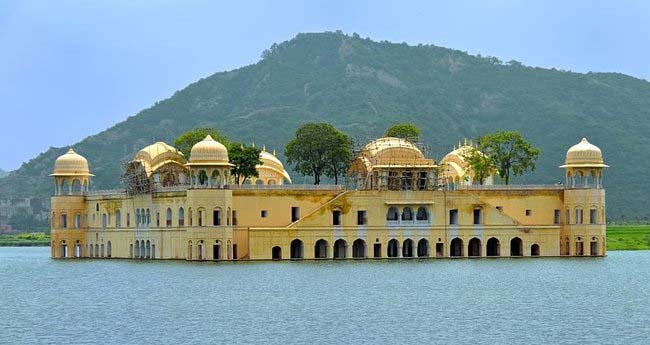
The alarm goes off before dawn today — and it is worth every minute.
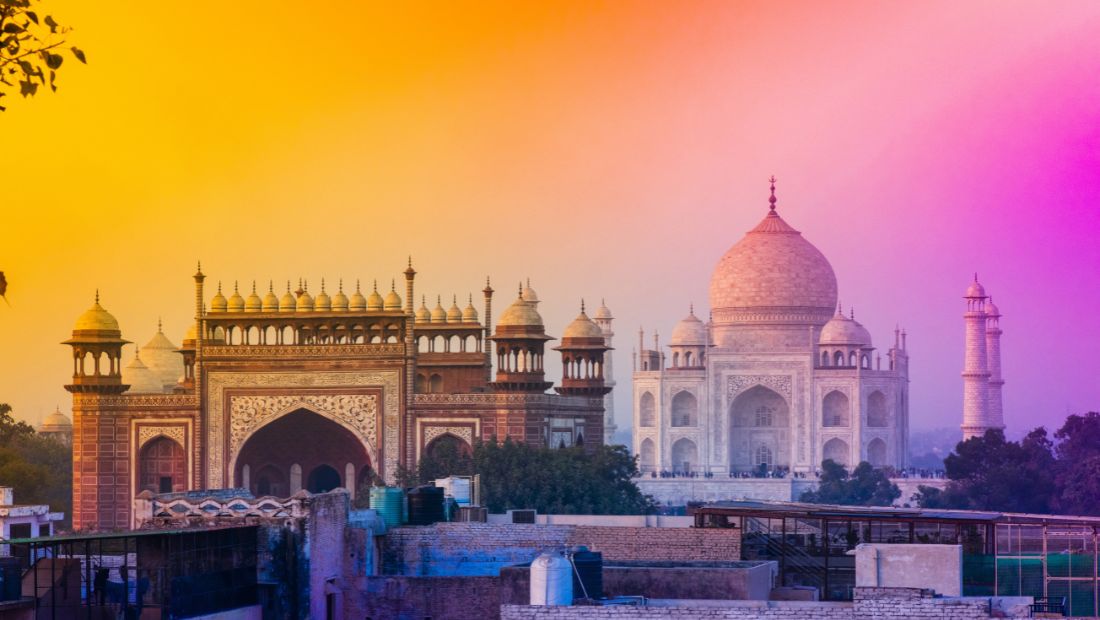
Your guide meets you at the hotel and walks you to the Taj Mahal’s eastern gate as it opens. In the first light of sunrise, the white marble shifts from pale silver to rose to deep gold in a sequence that no photograph captures and no description does justice. This is the moment most guests call the highlight of their entire trip to India. Your guide will take you through the interior chambers, explain the extraordinary pietra dura stonework — 28 types of precious and semi-precious stone inlaid by hand — and position you at the best vantage points before the crowds build up.
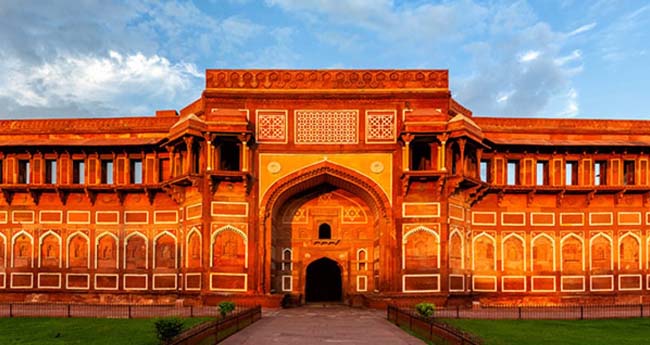
After the Taj, cross the city to Agra Fort — the UNESCO-listed red sandstone citadel on the banks of the Yamuna. Inside its 2.5-kilometre walls are layered centuries of Mughal ambition: Akbar’s older red stone structures, Shah Jahan’s later white marble palaces, and — most poignantly — the Musamman Burj, the octagonal tower room where Shah Jahan was imprisoned by his own son Aurangzeb and spent his final eight years gazing across the river at the Taj Mahal he had built for his wife. It is one of the most affecting stories in all of Indian history, and standing in that room, you understand it completely.
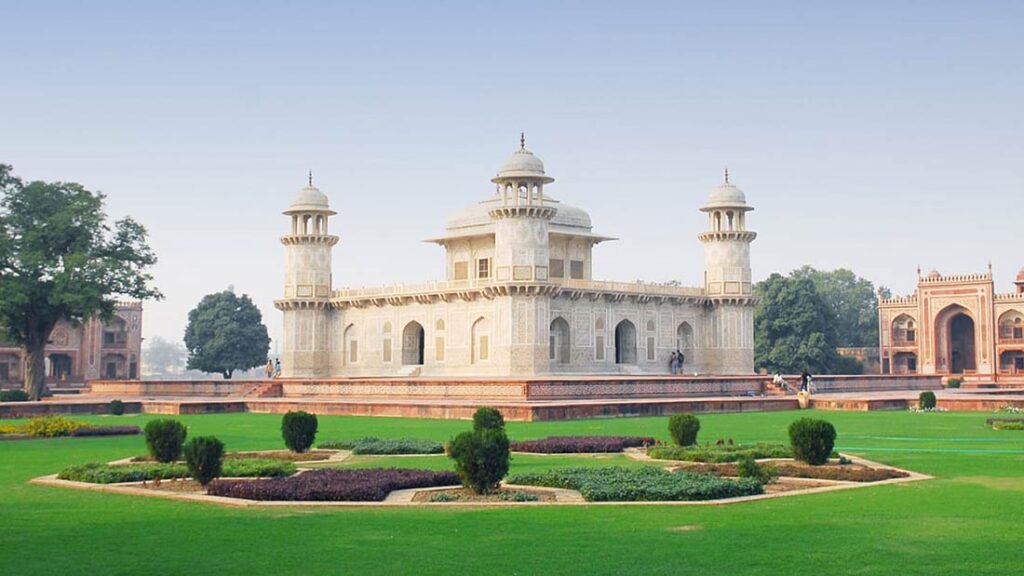
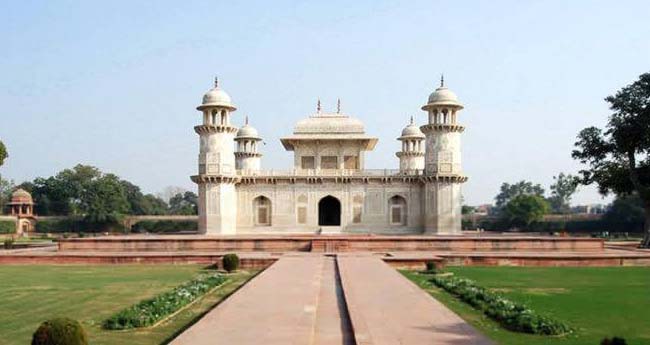
If time permits, the afternoon offers the Tomb of Itimad-ud-Daulah — the so-called Baby Taj, a jewel-box mausoleum that actually predates the Taj Mahal and pioneered the pietra dura inlay technique that would define it. Smaller, quieter, and exquisitely detailed, it rewards visitors who make the effort.
After lunch, your driver takes you west on the 4–5 hour road to Jaipur. Evening arrival; check in to your hotel. Overnight in Jaipur.
Monuments: Taj Mahal (sunrise), Agra Fort. Optional add-on: Baby Taj (Tomb of Itimad-ud-Daulah)
Day 4 — Full-day Jaipur · Three forts
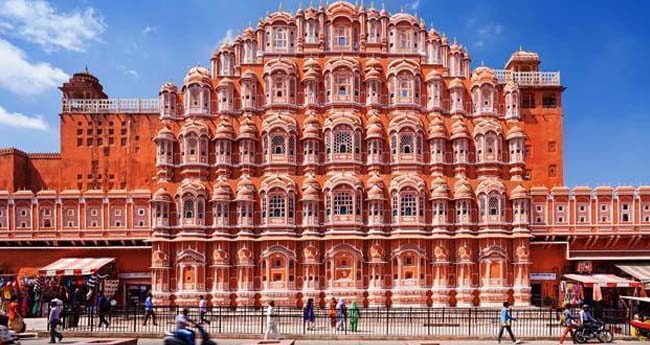
Jaipur’s three hillforts occupy an afternoon each on lesser itineraries. On this tour, they get a full day — and the difference shows.
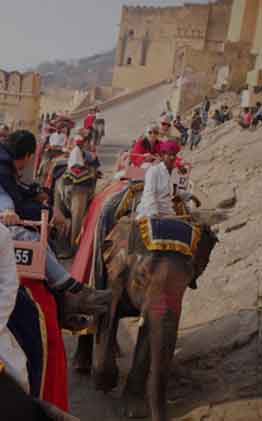
Start early at Amer Fort, the magnificent hilltop fortress that was the Kachhwaha Rajput capital before Jaipur was founded in 1727. You can ride an elephant up the cobbled ramp to the main gate (optional) — one of the most theatrical entrances to any building in India. Inside, the Sheesh Mahal (Hall of Mirrors) is breathtaking: an entire ceiling and four walls embedded with thousands of mirrored glass pieces, designed so that a single candle flame reflects into the illusion of a starlit sky. Your guide will walk you through the military engineering of the outer walls, the intimate zenana (women’s quarters), and the painted frescoes that have somehow survived nearly four centuries.
From Amer, drive up the ridge to Nahargarh Fort — the “abode of tigers,” built in 1734 as a retreat and defensive stronghold for the Maharaja of Jaipur. Nahargarh sees far fewer visitors than Amer and is all the better for it. The views from its ramparts across the entire spread of the Pink City are extraordinary, especially in the mid-morning light before the haze builds. Allow time to simply sit and take it in.
Nearby Jaigarh Fort connects to Amer by an underground passage and houses the Jaivana — a cannon cast in 1720 that remains the world’s largest wheeled cannon. It was test-fired exactly once, sending a cannonball several kilometres into what is now a lake. It was never used in battle.
The afternoon is yours for Jaipur’s bazaars. The city is one of India’s great shopping destinations — your guide will point you toward Johari Bazaar for gemstones and silver jewellery, Bapu Bazaar for block-printed textiles and mojari shoes, and the smaller lanes around Tripolia Gate for blue pottery and lac bangles. Overnight in Jaipur.
Monuments: Amer Fort, Nahargarh Fort, Jaigarh Fort
Day 5 — Jaipur city centre · Return to Delhi
A relaxed final morning covering Jaipur’s inner city monuments before the drive home.
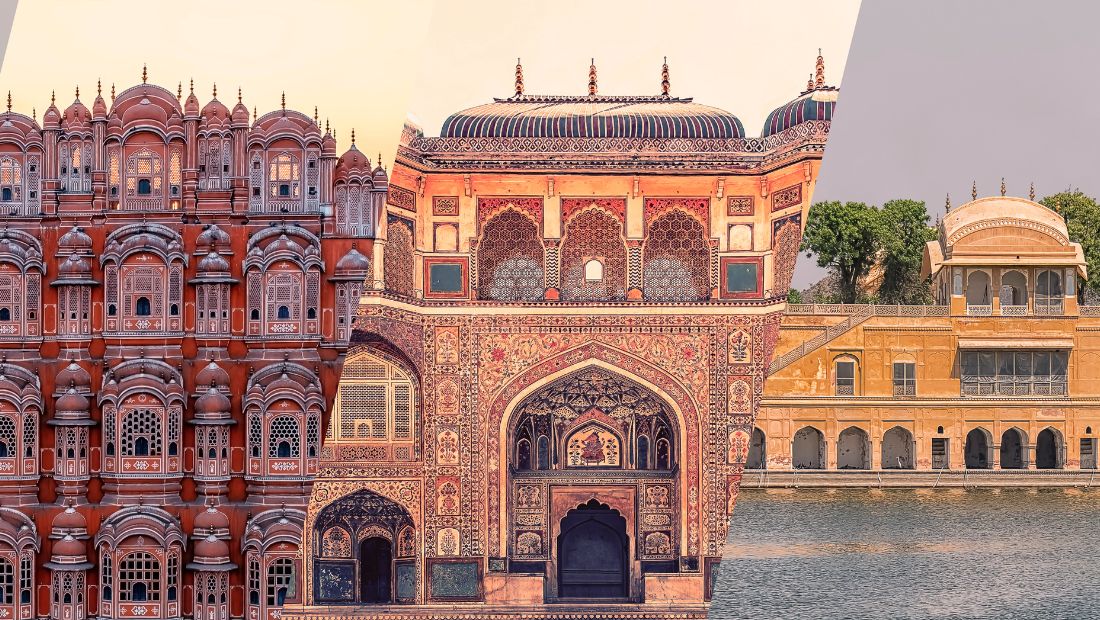
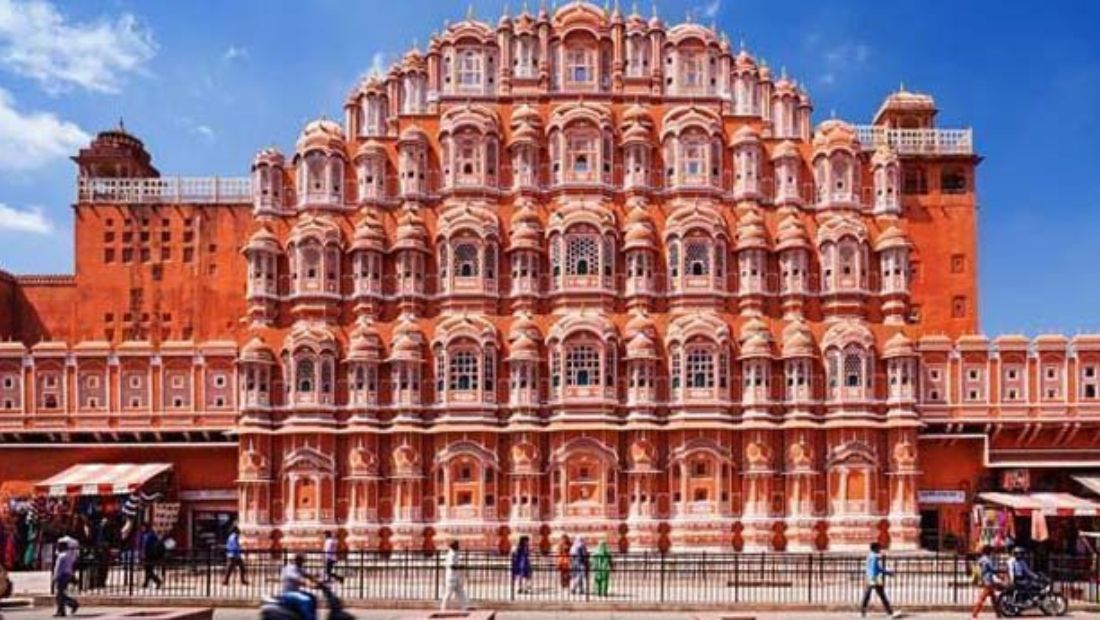
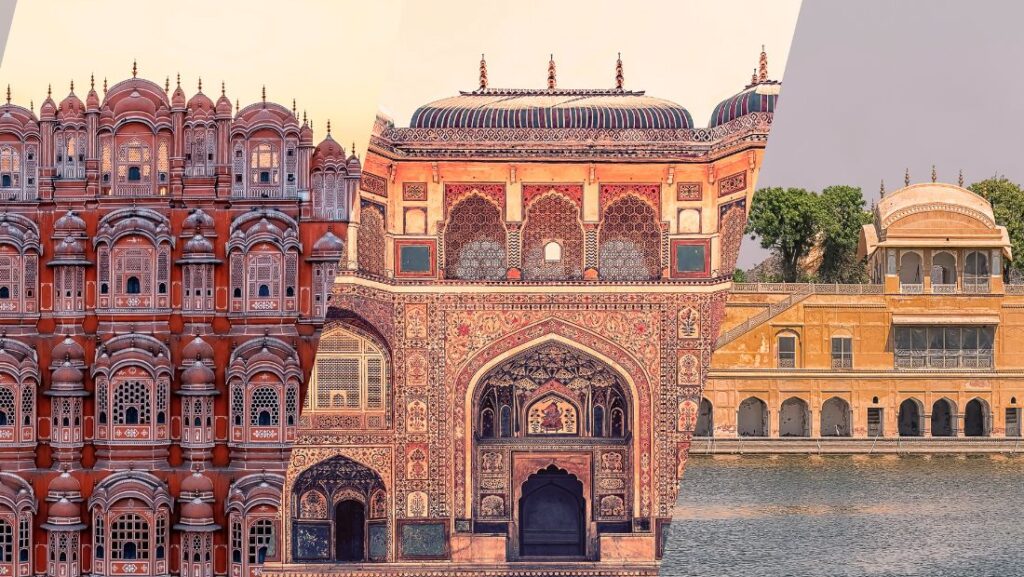
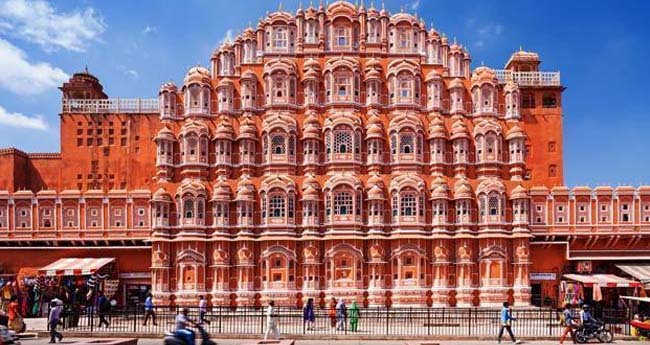
Hawa Mahal first — the Palace of Winds, Jaipur’s most photographed landmark. Built in 1799 by Maharaja Sawai Pratap Singh, its extraordinary five-storey facade contains 953 individual latticed windows, designed so that royal women of the zenana could observe street festivals and processions below without being seen themselves. From the street it looks almost two-dimensional, a theatrical backdrop rather than a building. Walk inside and it opens into a surprising warren of chambers and staircases, each window framing the bazaar outside like a painting.
Then Jantar Mantar, the open-air astronomical observatory built by Maharaja Jai Singh II between 1724 and 1734 and now a UNESCO World Heritage Site. Its 19 geometric instruments — built from stone, marble, and brass at a monumental scale — were used to track planetary positions, predict eclipses, and determine the precise timing of monsoon seasons. The centrepiece, the Samrat Yantra, is the world’s largest stone sundial: 27 metres tall and accurate to within two seconds. Your guide’s explanation of how 18th-century Rajput astronomers used pure geometry and naked-eye observation to map the heavens is one of the quiet intellectual highlights of this tour.
The morning ends at City Palace — the vast royal complex at the heart of the old walled city, still partially home to the royal family of Jaipur. The Maharaja Sawai Man Singh II Museum within the palace holds one of the finest collections of royal arms, manuscripts, miniature paintings, and Rajput and Mughal textiles in India.
After lunch, your driver sets off on the 5-hour return journey to Delhi. Drop-off at your hotel, airport, or wherever you need. This marks the end of your Golden Triangle tour.
Monuments: Hawa Mahal, Jantar Mantar, City Palace. Optional: Albert Hall Museum
What's included / excluded
Included
- Private air-conditioned vehicle for all transfers and sightseeing throughout (Delhi–Agra–Jaipur–Delhi)
- Government-approved, English-speaking guide in Delhi, Agra, and Jaipur
- Airport/hotel pickup and drop-off in Delhi
- Akshardham Temple visit on Day 2 before departing for Agra
- Packaged mineral water throughout
- All applicable taxes
Not included:
- Monument entry fees (Taj Mahal approx. USD 13–15; Agra Fort approx. USD 7; Akshardham Temple free entry, paid attractions inside optional; Jaipur forts approx. USD 3–8 each)
- Lunch and dinner (your guide will recommend excellent local options at every stop)
- Tips for guide and driver (appreciated but entirely at your discretion)
- Optional: elephant ride at Amer Fort, Baby Taj entry, Chokhi Dhani evening experience
We provides the following Vehicles during this Tour
- Guests: A.C. Toyota Etios Car (Sedan)
- Upto five Guests: A.C. Toyota Innova Car (MPV)
- Above 5 Guests: A.C. Tempo Traveler (Coach)
Available Transport Options



Frequently Asked Questions(FAQs)
How does the 5-day tour differ from the 3-day or 4-day version?
The 5-day tour gives you two meaningful extras. First, a dedicated morning at Akshardham Temple — the world’s largest Hindu temple complex, which the shorter tours skip entirely due to time. Second, two full days in Jaipur instead of one, meaning you can visit all three hillforts (Amer, Nahargarh, and Jaigarh) and still have the inner-city monuments and bazaars without feeling rushed. It’s the version we recommend for first-time visitors to India who have the time.
What makes Akshardham Temple worth the stop?
Akshardham is genuinely unlike anything else in India. Built in 2005 from hand-carved sandstone and marble by 11,000 artisans over five years, it is the largest Hindu temple complex in the world. Unlike the Mughal monuments that dominate the rest of this tour, Akshardham shows a completely different strand of India’s architectural tradition. Note that cameras and phones are not allowed inside the main monument — everything is checked at the entrance — so plan accordingly.
Is this a private tour or a group tour?
Fully private. Your vehicle, your guide, and your schedule belong exclusively to your group. No strangers in your car, no fixed group departure times. If you want to spend more time somewhere or skip a stop, just tell your guide.
What if Day 2 falls on a Monday?
Akshardham Temple is closed on Mondays. If your itinerary falls on a Monday for Day 2, we’ll shift the temple visit to Day 1 and adjust the Delhi sightseeing accordingly — you’ll still see everything. Just mention your travel dates when booking and we’ll plan around it.
When is the best time to visit?
October to March. Temperatures are comfortable (10–25°C), skies are reliably clear, and the Taj Mahal’s marble is at its most beautiful in winter light. Avoid April–June (extreme heat, Agra regularly exceeds 45°C) and July–September (monsoon season).
Can the itinerary be customised?
Yes. Common requests include adding a cooking class in Delhi, a block-printing workshop in Jaipur, a sunset Taj Mahal view in addition to sunrise, or an extra night anywhere along the route. Just mention it when booking and Ashish will arrange it.
How much does the 5-day Golden Triangle tour cost?
Prices start from USD 130 per person for a group of 2. See the pricing table above for exact rates by group size. Monument entry fees are paid at the gate and are not included.
Book This Tour
Awards & Applauds


Reach out to our excellent support team via Call/Whatsapp and email. We are happy to talk to you.

We adhere to Covid appropriate behaviour: Please note that all our cabs are sanitazied after each trip. All our drivers and staff persons are fully vaccinated and wear masks at all times.
Related Experiences
- (54 Reviews)
- 7 Days
- Delhi, Jaipur, Agra, Khajuraho and Varanasi